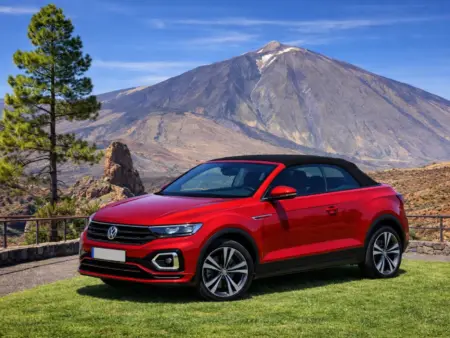
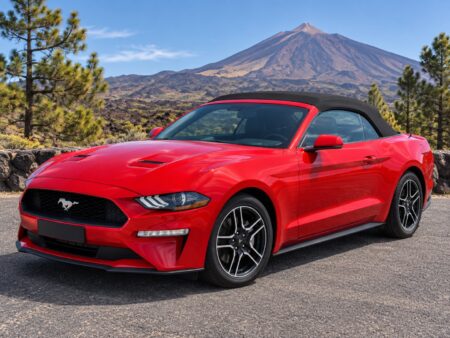
There is a moment on the TF-21, just past El Portillo, when the cloud sea opens below you and the volcano fills the windscreen. With the roof down, you do not watch this view, you are inside it. The air turns cold and clean, the pine scent gives way to bare lava, and for a few minutes the road belongs entirely to you. This is the sunrise drive to Mount Teide, and it is the single best reason to keep a set of car keys in your pocket while you are in Tenerife.
Below is exactly how we do it ourselves: the roads, the timing, the stops, and the car that turns a long climb into the best morning of your trip.
Why drive to Mount Teide at sunrise
Teide is the highest peak in Spain at 3,715 metres, and the road that climbs it is one of the great drives in Europe. An early visit can bring beautiful light across the caldera, but conditions vary: do not assume the road will be empty or a viewpoint parking space will be available. Check the Cabildo road-status notices and current access rules before you leave. If you make the effort to drive to Mount Teide early, allow time for a slow route and permitted stops.
There is also the sky. Teide National Park sits above the clouds and far from city light, which makes it one of the best stargazing sites on Earth, a certified Starlight Reserve. Time your departure right and you catch the stars first, then watch them fade as the Teide sunrise lifts over the lava fields. It is the kind of morning people remember for years.
The route, step by step
From the resort strip of the south, the climb is a steady, switchbacking ascent through changing worlds. Choose your departure time from the official sunrise time for your date, the current road status and the access rules.
- South coast to the foothills. From Costa Adeje, Los Cristianos or Las Americas, take the TF-51 and TF-21 toward Vilaflor, the highest village in Spain and your last reliable chance for supplies. Check current access and road status, and allow time for stops.
- Through the pine forest. Above Vilaflor the TF-21 winds through fragrant Canary pine. In the dark your headlights catch the trunks; on the way down you will see how green it all is.
- Into Las Canadas caldera. The forest suddenly ends and you enter a vast volcanic amphitheatre, a moonscape of ochre, black and rust with Teide rising at its centre. This is the heart of the national park.
- Roques de Garcia. Pull in at this cluster of wind-sculpted rock formations, including the iconic finger of Roque Cinchado, set against the cone of the volcano. It is the most photographed spot in the park for good reason.
- El Portillo and the TF-24. If you approach from the north, or want to loop home a different way, the TF-24 runs across the high plateau from El Portillo toward La Laguna, an unforgettable high-altitude ridge road. Many drivers go up the TF-21 and come down the TF-24 to see both.
Plan on roughly 75 to 90 minutes of driving from the south coast to the Teleferico base station, not counting stops. Add time for photos, because you will stop.
Best time to go
Choose the departure time from the official sunrise time for your date, the current road status and the access rules. Early conditions vary; do not assume a road will be empty or that a viewpoint parking space will be available. Check the Cabildo road-status notices before you leave and allow a buffer for a slow drive and permitted stops.
The Cabildo now manages the TF-21 section between El Portillo and Boca Tauce and may control traffic or sanction or remove vehicles parked improperly. Further entrance controls and 500 reservable parking places with visitor charges were announced for late 2026; viewpoint controls were announced for summer 2026. Check the latest Cabildo notice to see which measures apply on your date. Do not assume open roads, unrestricted access or available parking.
Stargazing first, then sunrise
If you leave even earlier, you arrive in full darkness and get the famous Teide night sky before dawn. Above the cloud layer and far from light pollution, the Milky Way is startlingly bright. Bring a blanket, find a dark mirador away from any lights, and let your eyes adjust for ten minutes. Then the horizon begins to glow and the show changes.
Which car for this road
The honest answer is that two kinds of car suit this drive, and you choose by how you want to feel.
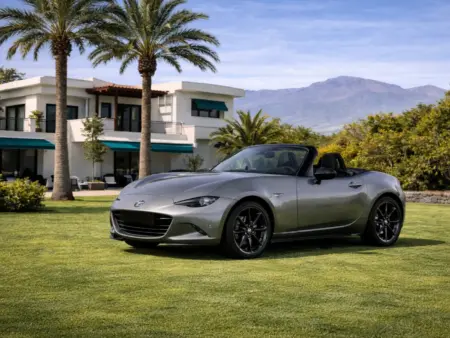
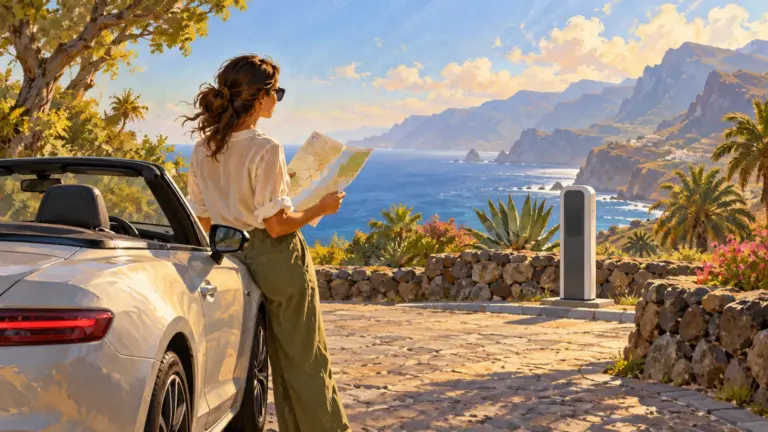
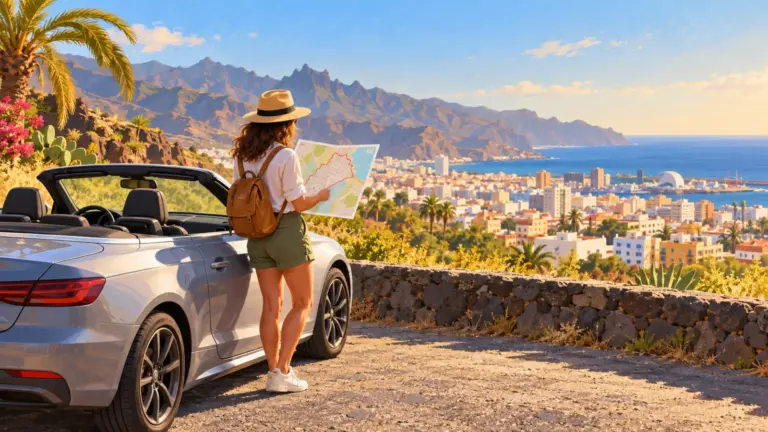
For the sunrise itself, nothing beats an open top. A convertible turns the moment the cloud sea opens into something physical, the cold air, the light, the silence. When people decide to rent a convertible Tenerife visitors mention this exact drive as the reason. If you want that, look at our cabriolet category.
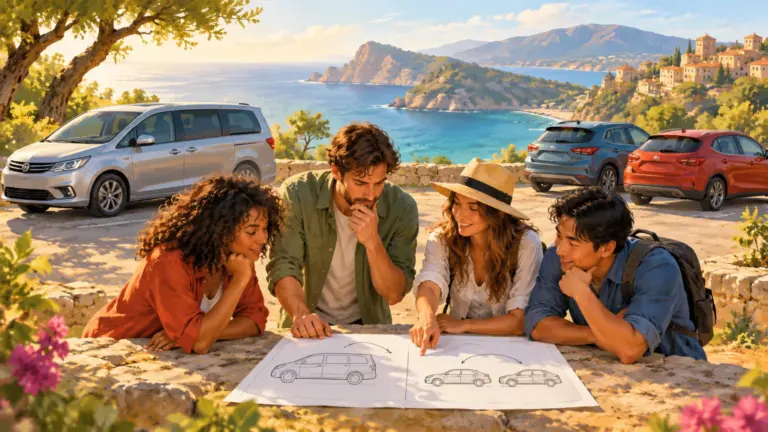
For the climb itself, comfort matters. The TF-21 is a long series of tight switchbacks gaining well over two kilometres of altitude. A relaxed automatic takes the work out of the bends and the cold-engine start, so you watch the scenery instead of wrestling the gearbox. If two of you are travelling light, a nimble economy automatic is plenty. If you are a family or want extra grip and a higher view over the lava fields, an SUV or 4×4 is the easy, confident choice. Browse the full fleet and pick what fits your morning.
Where to stop, watch and photograph
- Roques de Garcia. The classic Teide composition, jagged rock in the foreground, the cone behind. Best in the soft side-light just after sunrise.
- The Teleferico base station. The cable car climbs from 2,356 m to 3,555 m in eight minutes, taking you to within striking distance of the summit. Book ahead in high season. Reaching the summit trail requires a separate reservation/authorisation; the cable-car ticket alone does not include it. Since 19 January 2026, bookings for PNT 10 and PNT 07 in specified time bands may carry a fee depending on trail, day and visitor category. Check current requirements, price and availability on Tenerife ON before booking.
- High miradores along the TF-24. The plateau road is lined with pull-ins that look out over the caldera and, on a clear morning, across to neighbouring islands floating on the cloud.
- The cloud sea on the descent. Coming back down the TF-21 you drop into the inversion layer. Find a safe pull-out and watch the white ocean of cloud pour over the ridges below you.
Practical and safety tips
The mountain is friendly if you respect it. A few things we always do:
- Fuel up before you go up. There are no petrol stations inside the national park. Fill the tank in the south or in Vilaflor, never trust the last bar going up a 2,000 m climb.
- Bring warm layers, even in summer. Temperature drops roughly 6 to 7 degrees for every 1,000 m of altitude. A 25 degree morning on the coast can be near freezing at the Teleferico, and with the roof down it feels colder still. Pack a jacket, hat and gloves.
- Drive the switchbacks calmly. Use a low gear on the descent to save your brakes, take the hairpins gently, and watch for cyclists and the occasional loose goat. The roads are well surfaced but they demand attention, especially in the dark.
- Mind the altitude. At 3,500 m some people feel light-headed. Move slowly at the top, drink water, and do not rush.
- Carry water and a snack. Services inside the park are limited and open late. A flask of coffee for the sunrise is a fine idea.
How to get the car
This is the part we have made genuinely easy. With Mandry Cabrio no card is needed to book and nothing is charged until we confirm, you simply pay on pickup. We deliver the car straight to your airport or your hotel, so you can land in the afternoon, sleep, and roll out before dawn without a single queue at a rental desk. Our team drives these roads ourselves and speaks English, Spanish, Russian and Ukrainian, with personal WhatsApp support if you have a question at 05:00.
Ready for your own Teide morning? Reserve a convertible or browse the full fleet, choose airport or hotel delivery, and pay only when you pick it up.
When you are ready for more Tenerife driving, the Masca Gorge drive, the Anaga forest road trip, and our south coast cabrio route all pair beautifully with a Teide sunrise.